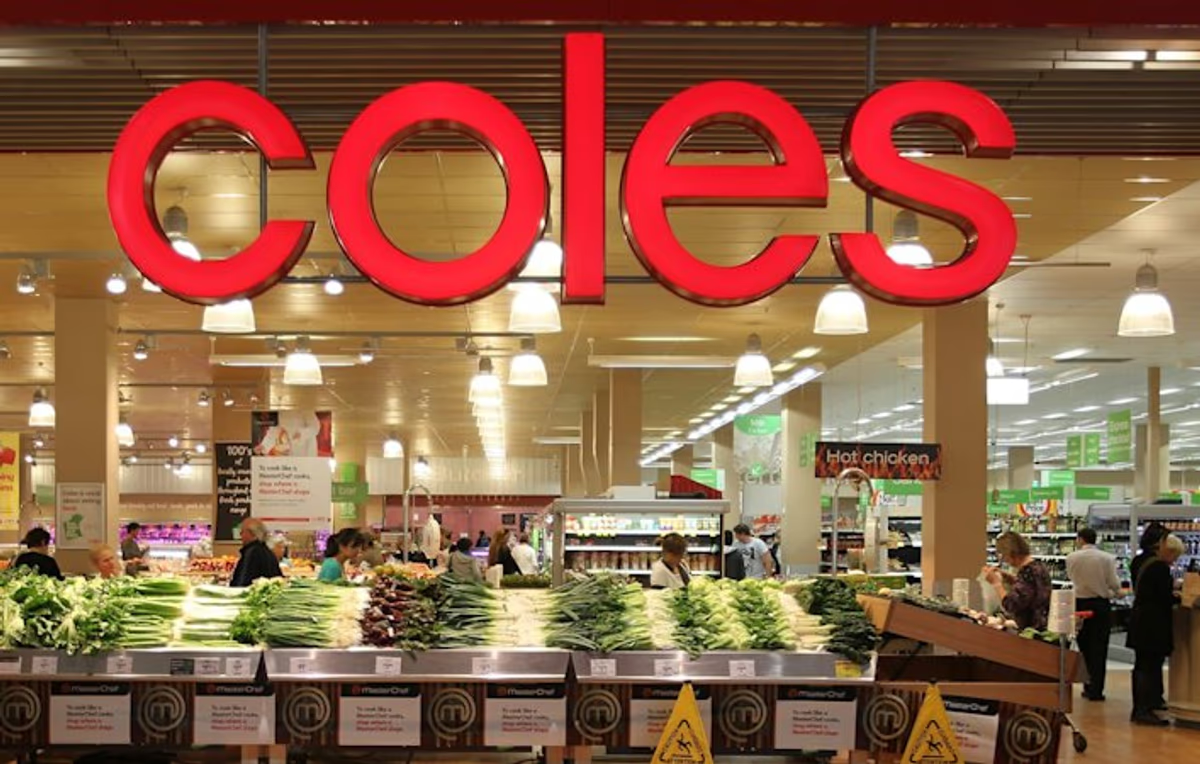
Coles’ stock plunged on Friday after the supermarket group flagged flat first-half profits and signalled additional fuel-related costs, knocking about $3.5 billion off its market value in early trading.
The share price fell roughly 10% shortly after the quarterly update, before recovering some ground to trade about 6.8% down shortly after midday.
For the three months to September, Coles reported supermarket sales revenue rose 3.6% to $10.3 billion, a result the company said was supported by strong e-commerce growth but partly offset by heavier discounting and increased competition.
Company executives described customers as price-sensitive, shifting between retailers and channels, and making greater use of promotions and loyalty offers as cost-of-living pressures persist. The chief executive said households were buying more specials and using loyalty points, and that more meals were likely to be eaten at home during the lead-up to Christmas.
Coles warned that sustained high fuel prices would add to its cost base. It also flagged supplier price requests driven by higher wages and rising costs for utilities, rent and insurance, and said those pressures underpinned its expectation of flat supermarket earnings for the first half compared with the prior period.
Analysts at Citi pointed to Coles’ guidance as evidence of lost momentum versus Woolworths, saying the supermarket’s need to invest in pricing and promotions appeared to reflect competitive pressure. Citi had been modelling about 8% supermarket profit growth before the update.
On prices, Coles reported supermarket inflation excluding tobacco at 1.1% in the September quarter, with upward pressure in dairy and meat. The company also noted a number of fresh produce and pantry items were in deflation, helping deliver value on some everyday products.
The Australian Bureau of Statistics this week published a consumer prices reading that recorded a 4.3% annual rise to September, a backdrop that market participants say increases the chance of another Reserve Bank interest rate move at next week’s meeting.
Coles described shifts in how customers shop: younger households are increasingly using price comparison apps, social media and generative AI tools to find bargains, the company said. It also reported higher demand for protein-rich foods, canned fish and ready-to-cook items, and said some categories such as canned sardines were selling faster than it could stock them.
Investors and suppliers will be watching how Coles balances price investment with margin pressures as competition from non-traditional players, including pharmacies and specialist online grocers, intensifies in the grocery sector. The group’s near-term guidance points to a tighter margin environment for supermarkets and continued pressure on suppliers and logistics partners.
Coles’ quarterly update covered trading to the end of September and set the company’s expectation for the first half; the market reaction highlighted investor concern about growth and margin resilience in a highly contested grocery market.