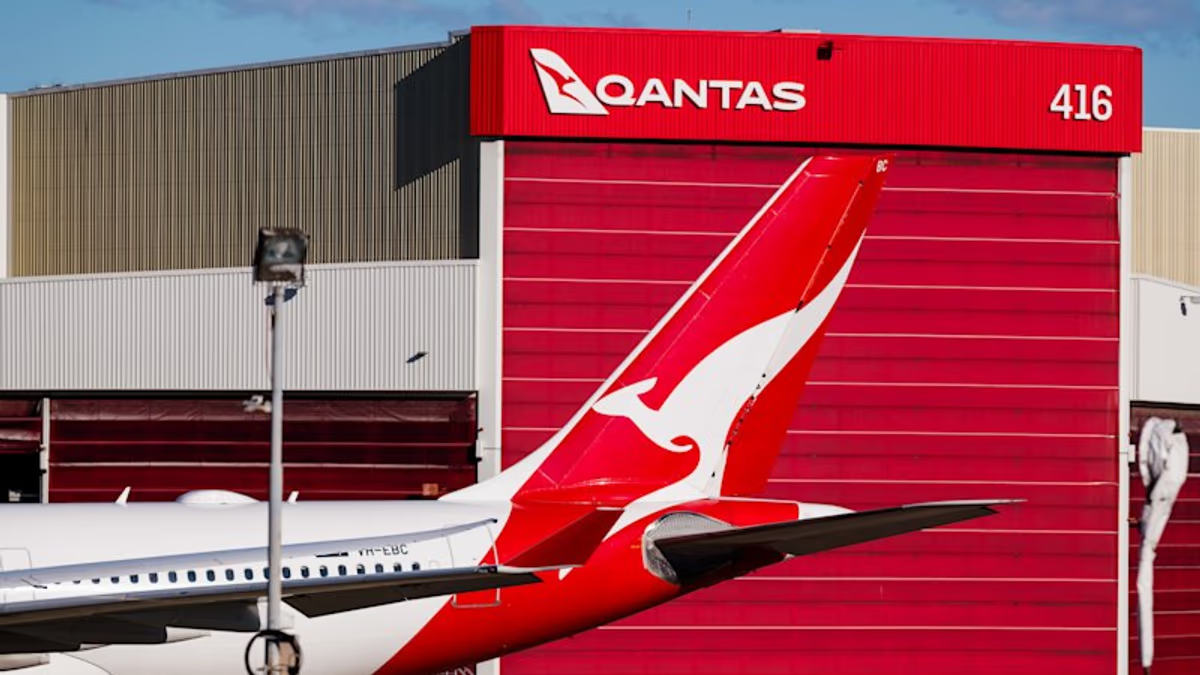
Qantas has told shareholders it will raise fares and reduce some domestic flying after jet fuel costs pushed its expected fuel bill for the final six months of 2026 to $3.75 billion.
That figure is up from a prior forecast of $3.6 billion and $1.1 billion higher than the same period a year earlier, the airline said in a market update released ahead of its annual meeting.
The carrier plans to accelerate cuts to domestic capacity, moving from a 1 per cent reduction in the first quarter of 2027 to 5 per cent in the second quarter, while international capacity is expected to be roughly flat at 2 per cent across the same period.
Qantas said it would “will continue to adjust fares and capacity in response to higher fuel costs.”
Executives said airlines are responding to the surge in crude and jet fuel prices since the Middle East conflict began in February by swapping aircraft for smaller types on some routes, reducing frequencies and withdrawing services where necessary.
Qantas is protected to an extent by its fuel hedging program, which is in place for about 85 per cent of the 2027 financial year, the company said.
University of Sydney aviation professor Rico Merkert described the airline’s approach as discipline rather than weakness.
“less a sign of weakness than of discipline”
Merkert also warned the protection provided by hedging is temporary, saying the industry faces rising replacement costs as contracts expire.
“The airline has benefited from fuel hedging, which gives it more protection than many unhedged US carriers, but that benefit is not permanent,”
Qantas said demand for travel remains firm, with domestic leisure bookings strong and corporate and government travel holding steady. Jetstar’s international schedule is expected to shift from a 2 per cent capacity cut in the first quarter of 2027 to a 2 per cent increase in the following quarter.
Chief executive Vanessa Hudson emphasised the group has not altered its fleet renewal plans, pointing to Project Sunrise milestones due next year.
“In April, our first Project Sunrise aircraft arrives. And in October, we launch the first non-stop flight from Sydney to London.”
Qantas noted rerouted services via Singapore and Perth have helped the group avoid flying through parts of the Gulf region affected by periodic attacks.
Fuel accounts for about a quarter of an airline’s operating costs, the airline said, and Qantas expects total unit revenue from domestic and international operations to rise 8 to 10 per cent in the first half of 2027. The company added that the earnings effect of capacity changes will appear in the second half of the year, with formal guidance to be provided alongside the first half results in February 2027.