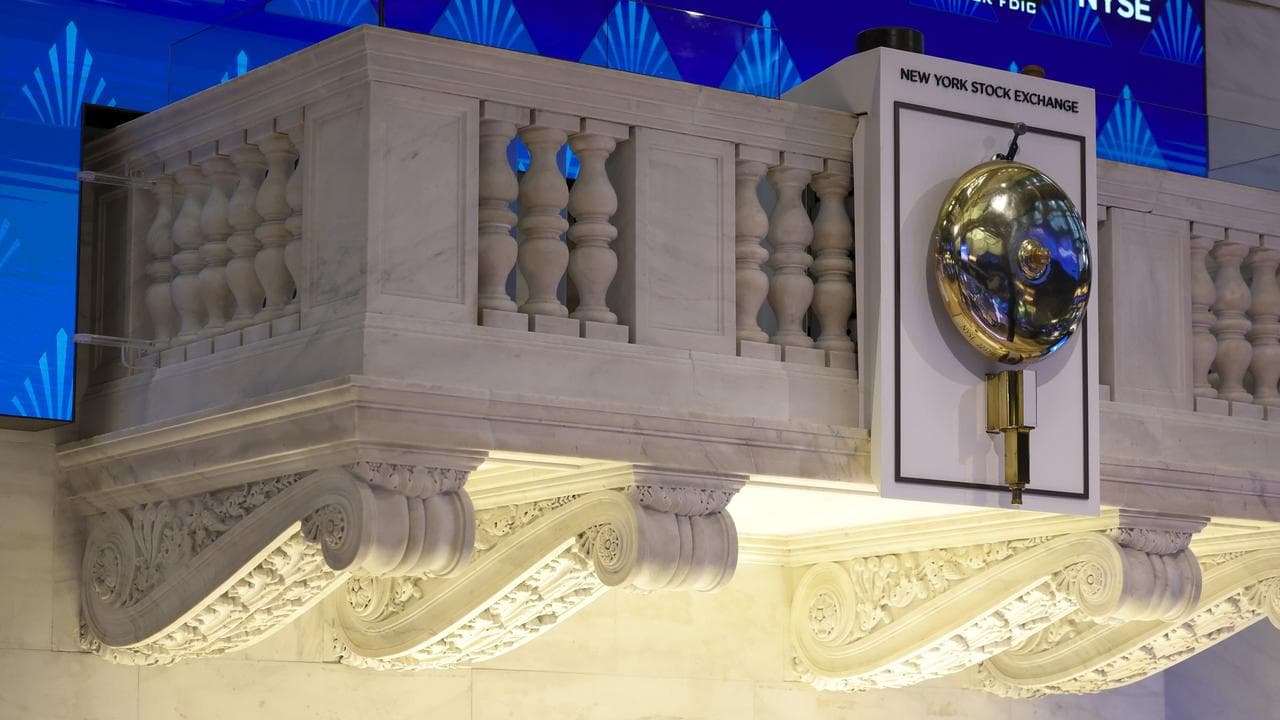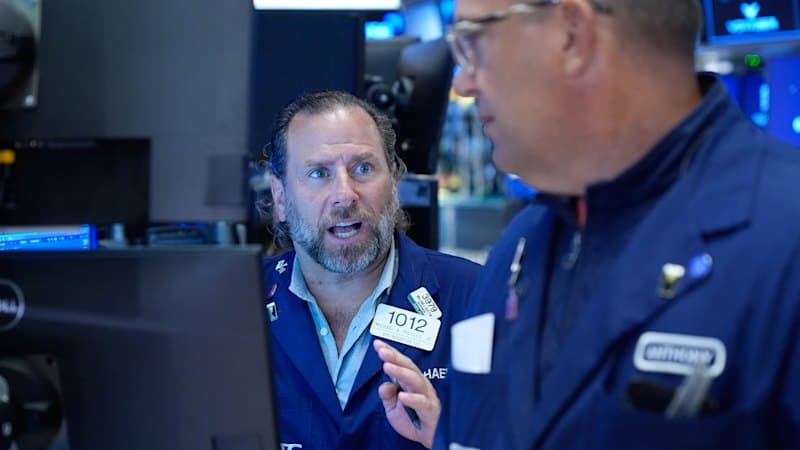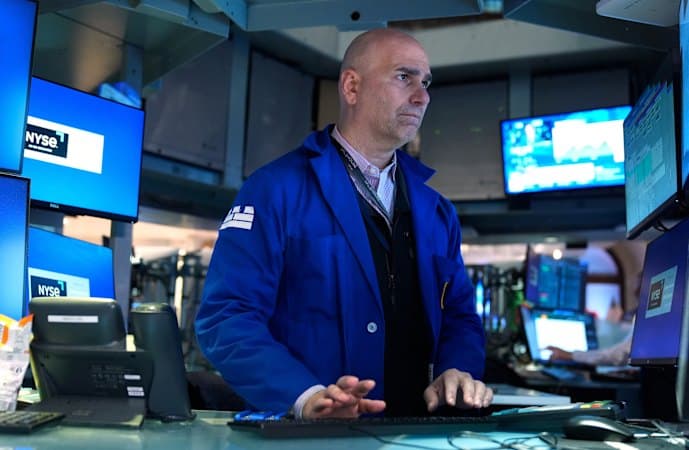
Wall Street fell sharply on Wednesday as a pullback in AI-focused stocks pushed major indexes lower: the S&P 500 slid 2.2%, the Nasdaq fell 3.2%, and the Dow lost 472 points or 0.9% in lunchtime trade.
Australian futures were set to head the local market higher, with contracts at 4.50am AEDT pointing to a gain of 26 points, or 0.3%, at the open. The ASX had lost 0.4% on Wednesday and the Australian dollar was trading at US66.27¢.
The rout centred on big technology names. Nvidia plunged 8.1%, Broadcom dropped 5.4% and Microsoft eased 2.8%. AI startup Anthropic slid 1.4% and remains about 30% below the peak of US$115 reached around its listing.
Investors have pared back enthusiasm that followed the surprise return of Jensen Huang to Nvidia’s CEO role, with fresh worries over corporate governance and the influence of a US president who owns millions of dollars’ worth of shares in the company compounding the move.
“At this point, between the AI angst and the newly announced tariffs, it doesn’t look like the Santa Claus Rally is in store for us this year,” said Chris Zaccarelli, chief investment officer at Northlight Asset Management.
The slide in AI stocks is colliding with signs of persistent inflation in the United States. The Federal Reserve’s preferred price gauge, the personal consumption expenditures index, showed prices rose 3.8% in October from a year earlier after a 3.6% pace in September, well above the central bank’s 2% target.
High inflation keeps the Fed on track to lift its benchmark rate, which markets expect at the December meeting, and that backdrop is making borrowing more expensive for companies and households. Ten-year Treasury yields fell to 4.82% from 4.91% late Tuesday as bond markets adjusted to the latest data.
Economic growth has nevertheless been strong: GDP for the July to September quarter was revised up to an annualised 4.3% rate, the fastest in three years, led in large part by spending from major tech firms building AI capacity and from higher-income households, while lower-income consumers are increasingly turning to credit.
Energy costs added to inflationary pressure. Oil rose 1.1% to US$89.80 a barrel, helped by geopolitical tensions in the Middle East, and energy stocks mostly gained, with Chevron up about 1% on the day.
Markets outside the US also felt the shock. South Korea’s Kospi plunged 6.2% as Samsung Electronics fell 9.9% and SK Hynix tumbled 11.1%; Japan’s Nikkei 225 was down 2.8%; and SoftBank Group, an early investor in OpenAI, slumped 14.8%.
Trade policy added another layer of uncertainty after US officials announced plans to raise tariffs on China, the European Union and other trading partners. Businesses typically pass tariff costs to consumers, and that upward pressure on prices was cited as a factor in recent political shifts in Washington.
US markets will be closed on Thursday for Thanksgiving and will shut early at 1pm Eastern on Friday, altering liquidity and trading patterns for the end of the week.