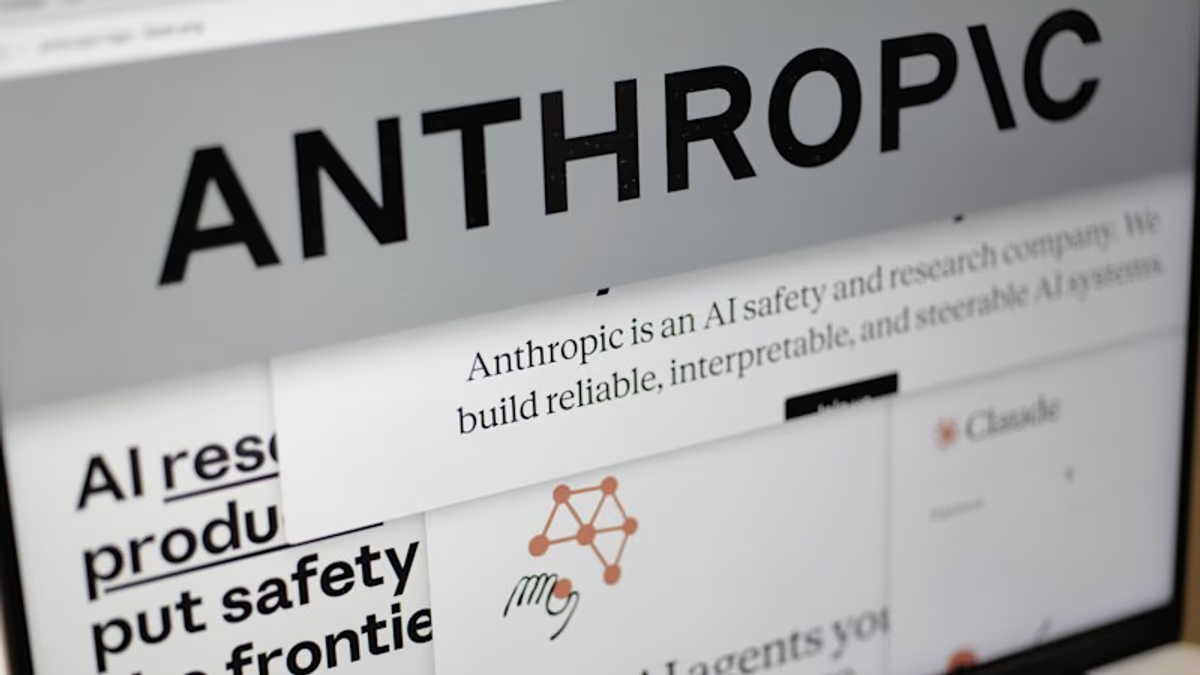
Anthropic has filed a prospectus for an initial public offering expected to raise about $US100 billion, and disclosed it already holds $US112.4 billion in cash while expanding its revolving credit facility from $US3 billion to $US15 billion.
The company warned in the filing that it may need to seek additional funding sooner than previously expected, underlining the scale of capital required to develop frontier AI models and the attention the proposed float has attracted across the industry.
Bankers reportedly trimmed early valuation hopes from around $US2 trillion to a range of $US1.5 trillion to $US1.75 trillion as public technology valuations softened, according to market reports cited alongside the prospectus.
Since 2021 Anthropic has raised more than $US140 billion in successive private rounds: about $US13 billion at a $US183 billion valuation roughly a year ago, $US30 billion in February at $US380 billion, and $US65 billion in May at a $US965 billion valuation.
On revenue and profit, the filing shows Anthropic generated $US16.3 billion in the first half of this year, up 1300 per cent from $US1.16 billion in the equivalent half a year earlier; third-quarter revenue growth, however, was 45 per cent, indicating a slower rate of increase on a much larger base.
The company recorded a net loss of $US80.7 billion, but $US72.4 billion of that was a non-cash charge tied to the revaluation of convertible notes; on an operating basis the loss was $US693 million for the period.
Capital spending on compute and infrastructure jumped sharply: Anthropic spent nearly $US9 billion in the half-year on those items versus $US1.1 billion in the same period last year, and disclosed contractual commitments of about $US417 billion for future compute purchases. The prospectus also flagged planned spending of more than $US750 billion over the next decade.
The filing highlighted improving efficiency in compute spending relative to revenue. In the first quarter of last year the company spent just over $US2.50 on compute and infrastructure for each dollar of revenue; by the June quarter that figure had fallen to less than US50¢ per revenue dollar, a trend Anthropic says could make its large future capital outlays economically sensible.
Anthropic devoted a substantial portion of its prospectus to risks from advanced AI, and included an unusual governance plan. The company proposes a Long-Term Benefits Trust that can nominate or remove four of seven directors, while the founders will hold a special class of stock that grants 50.1 per cent of the voting interests despite conferring no economic interest. One member of the trust named in the filing is former US Federal Reserve chair Ben Bernanke.
The filing contains a self-aware defence of heavy compute investment: the founders conceded the scale of their commitments “may seem irresponsibly large at first glance” and described the approach as "bold, but sane".
The prospectus cycle has implications beyond Anthropic. OpenAI has delayed a planned float into 2027, and market commentators have flagged that a stumbling or underwhelming Anthropic IPO could complicate fundraising prospects for other ambitious AI players, hyperscale cloud providers and specialist cloud firms.
Market conditions are relevant: sliding technology share prices and rising bond yields have begun to test markets' willingness to supply the large amounts of equity and debt the sector is demanding. Other recent capital moves cited alongside Anthropic include SpaceX’s equity raising of more than $US86 billion and a further debt-backed transaction of about $US40 billion, and Meta’s announced equity raising of $US95 billion.
If Anthropic’s listing succeeds at scale it will release a sizeable amount of public capital to the industry; if it absorbs market capacity it could increase pressure on smaller or more indebted AI players that are already tapping debt markets to fund expansion.