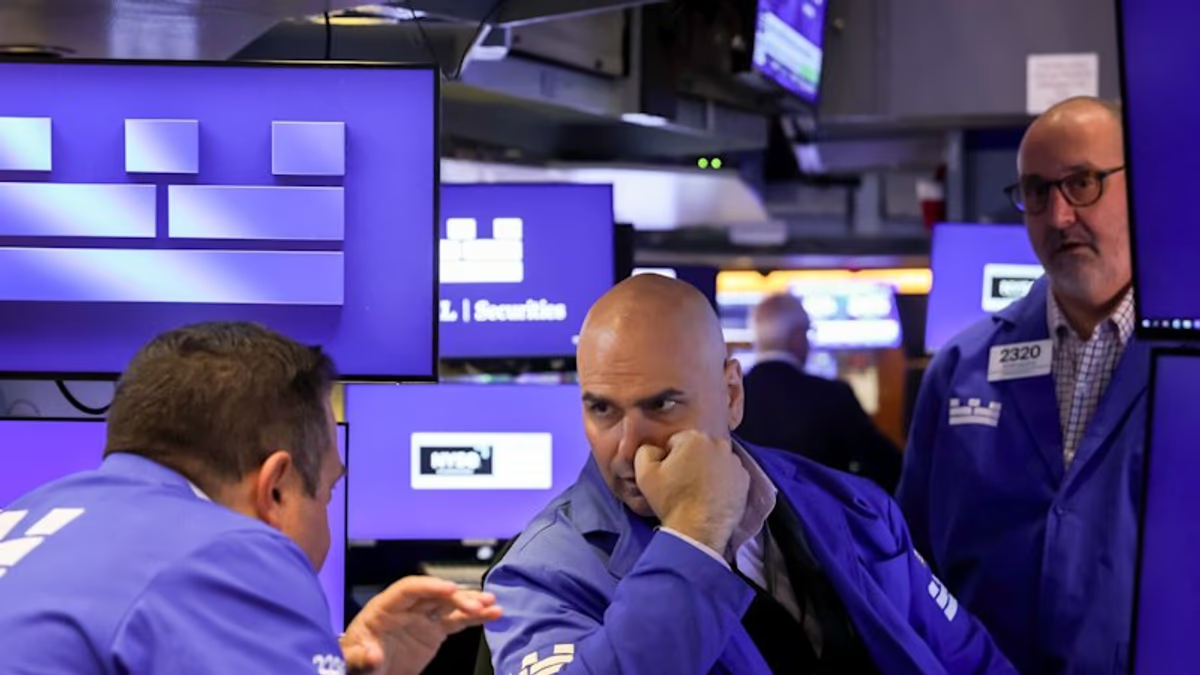
Australian share futures were pointing to a fall of 43 points (about 0.5%) at the open on Saturday after Wall Street closed broadly lower and oil surged to its highest level in more than four years.
US markets finished the session down across the board: the S&P 500 fell 0.5%, marking its second straight weekly decline, the Dow Jones Industrial Average dropped 1.2%, and the Nasdaq slipped 0.2%.
The move was driven in large part by energy prices. Brent crude climbed 3.1% to settle at US$116.72 a barrel, its highest since June 2022 after a jump from below US$97 at the start of October, and almost three quarters of S&P 500 constituents finished the day lower.
Higher oil helped energy companies while weighing on other sectors: Chevron rose 2.9% and ConocoPhillips gained 3.6%, offsetting some of the broader market weakness.
Several AI-related and chipmakers bucked the sell-off, with Micron Technology up 2.5%, Intel gaining 1.7%, Microsoft adding 0.7% and Advanced Micro Devices closing 1.7% higher.
“Investors appear increasingly focused on the economics of AI, particularly the substantial upfront costs required to build AI infrastructure and the uncertainty around the timing of returns on those investments,”
, Angelo Kourkafas, senior global strategist, Edward Jones.
That focus on the cost and timing of AI investments has put extra attention on upcoming corporate results. Major technology companies including Alphabet, Microsoft and Amazon are due to report next week, and investors will use those results to judge whether recent spending is translating into returns.
Industrial and financial stocks suffered some of the biggest losses: Caterpillar fell 2.4%, American Express slumped 3.7% despite beating profit forecasts and announcing its first major job cuts in about a decade, while JPMorgan Chase and Citigroup each lost 1.5% and Capital One retreated 1%.
Fixed income moved with equities: the US 10-year Treasury yield edged up to 4.99% from 4.96% late on Thursday. Yields have risen globally amid concerns about government debt levels and inflation that remains stubbornly above 3% in the United States.
Markets are braced for several key events next week, including the Federal Reserve meeting where Wall Street largely expects rates to be held but is leaning toward another hike in December, and the Fed’s preferred inflation gauge, the personal consumption expenditures index, which is forecast to show inflation running at 3.7% in September.
European bourses closed mostly lower, with France’s main index down 0.4% while French government bond yields eased slightly. The market narrative cited geopolitical pressure on oil supplies, with the report saying the US war with Iran has severely cut the world’s oil supply, pushing up costs for petrol and consumer goods.
The Australian dollar traded at around US70.26¢, reflecting the risk-off tone and higher oil prices ahead of the local open.