Chalice Mining, BPM Minerals and Australian gold and copper each released significant exploration results this week, with new drill hits opening up follow-up programmes across three different Australian districts.
At Chalice’s Kestrel prospect within the Warrego North project, about 65 kilometres west-northwest of Tennant Creek, a reconnaissance reverse circulation program returned a headline intercept of 15m at 8.6g/t gold and 0.54% copper from 78m. That interval contains an ultra-high-grade core of 2m at 56.7g/t gold and 0.88% copper from 81m, and sits inside a broader 27m package grading 0.42% copper and 4.8g/t gold from 78m.
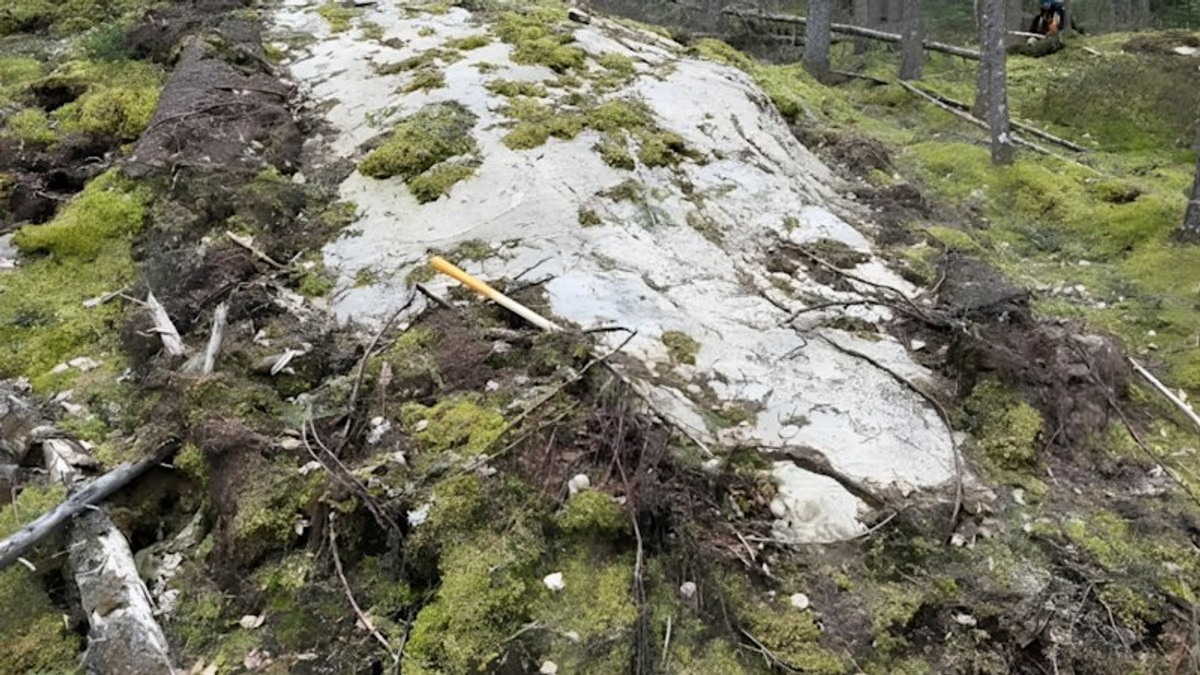
Chalice said the mineralisation dips steeply to the north-northeast, has been traced along about 500m of strike and down to roughly 140m, and remains open in all directions. The system is hosted in altered siltstones and sandstones rather than the typical ironstones of the district, which the company says may explain why it was overlooked by historical magnetic-based explorers.
The company secured tenure in May after negotiations on Aboriginal freehold land and has moved to lock in a large swathe of ground interpreted to cover a 140km extension of the Tennant Creek inlier. Chalice plans a detailed ground gravity survey in the coming weeks to map dense hematite-altered zones and to guide step-out and infill drilling.
BPM Minerals’ Forelands project in Western Australia, about 150km east of Kalgoorlie, produced a strong maiden result from the Bonnie & Clyde soil anomaly. One drill hole returned 4m at 20.57g/t gold from 39m inside saprolitic clays, plus 8m at 9.23g/t gold from 71m in an oxidised quartz-veined shear, with individual one-metre assays up to 73.33g/t and 64.71g/t.
The company said the holes had to penetrate paleochannel sands of 15-30m before reaching metamorphic basement rocks, and that the mineralisation appears to sit in the same high-grade basement that hosts the Tropicana district. BPM has completed 38 RC holes for 5,272m at Bonnie & Clyde so far, has $5.3 million in the bank, and expects more assays to arrive through Q4 2026 and Q1 2027.
Australian Gold and Copper’s South Cobar project returned a shallow oxide hit at the Evergreen prospect, with a scissor hole producing 16m at 5.1g/t gold from 61m, including 4m at 17.5g/t gold from 72m. That result links into earlier deeper polymetallic intercepts and helps build a coherent gold-rich framework across the western Evergreen area.
AGC said the new shallow hits complement previous diamond results that included high-grade gold with very large silver and base metal credits, and the company has $5.9 million in cash to pursue further drilling. The Browns-Evergreen corridor runs about 1.9km where a second resource opportunity is emerging alongside last year’s Achilles discovery, which hosts a 38.5 million-ounce silver-equivalent resource.
Each company has follow-up work planned: Chalice with ground gravity and targeted drilling, BPM continuing its RC program with potential diamond holes and an induced polarisation geophysical survey, and AGC seeking approvals for resource-definition drilling while awaiting assays from remaining RC holes. These results will determine whether the intercepts can be extended into larger, continuous systems and attract further investment or joint ventures.
Assay batches are still pending at several projects, and the companies have flagged further results and fieldwork in the coming months that will clarify the scale and continuity of the newly identified mineralised zones.