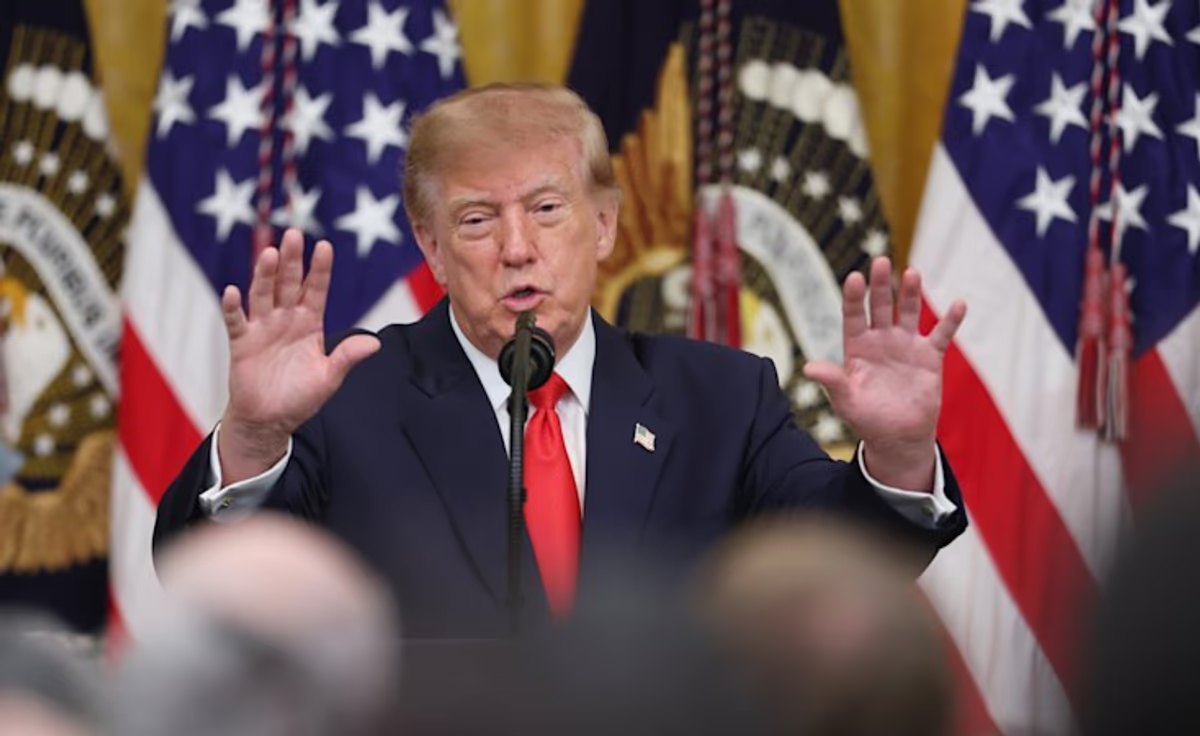
Prediction markets put the probability at more than 80% that Republicans will lose the House and 69% that they will lose the Senate in the US midterms on November 3, a shift that would leave President Donald Trump with far less authority in Washington.
Democrats need a net gain of four seats to capture the Senate, making the prospect of unified opposition in Congress a realistic near-term outcome. If those projections hold, Mr Trump will enter a period in which his ability to push major policy changes will be severely constrained.
Mr Trump’s approval rating has slid to 32% this month, a level that compounds his political weakness and increases the chance he will be occupied defending his position through legal and congressional challenges rather than advancing a policy agenda.
The prospect of a paralysed White House is likely to be received differently by global markets than a normally weak administration. After two years of abrupt trade moves, sudden tariff reversals and unpredictable diplomatic gestures, investors may prefer a pause in headline-grabbing actions.
That turbulence has included repeated tariff changes that forced firms to rethink supply chains on short notice, and diplomatic ups and downs that strained relations with long-standing partners. Some corporate decisions were made around shifting rules, creating planning uncertainty for exporters and multinational companies.
There have been positives alongside the disruption. The United States has taken a leading stance on artificial intelligence policy and markets have performed strongly, with record highs on Wall Street. Certain tariff measures have also brought in revenue where courts do not force repayments.
A less active administration could mean contested tariffs are allowed to fade as courts review their legality, reducing the constant risk of fresh trade barriers. Immigration enforcement measures that have tightened labour flows may also slow, with implications for labour markets and businesses that rely on migrant workers.
Senior economic officials appear able to keep core functions operating. Kevin Warsh, named chair of the Federal Reserve by Mr Trump, has supported rate rises where needed, and Treasury secretary Scott Bessent has worked to manage bond-market pressure while government spending has continued.
For exporters, manufacturers and international investors the immediate consequence may be fewer headline shocks and more predictable conditions for supply-chain decisions. That would allow companies to focus on longer-term planning rather than short-term responses to shifting US policy.