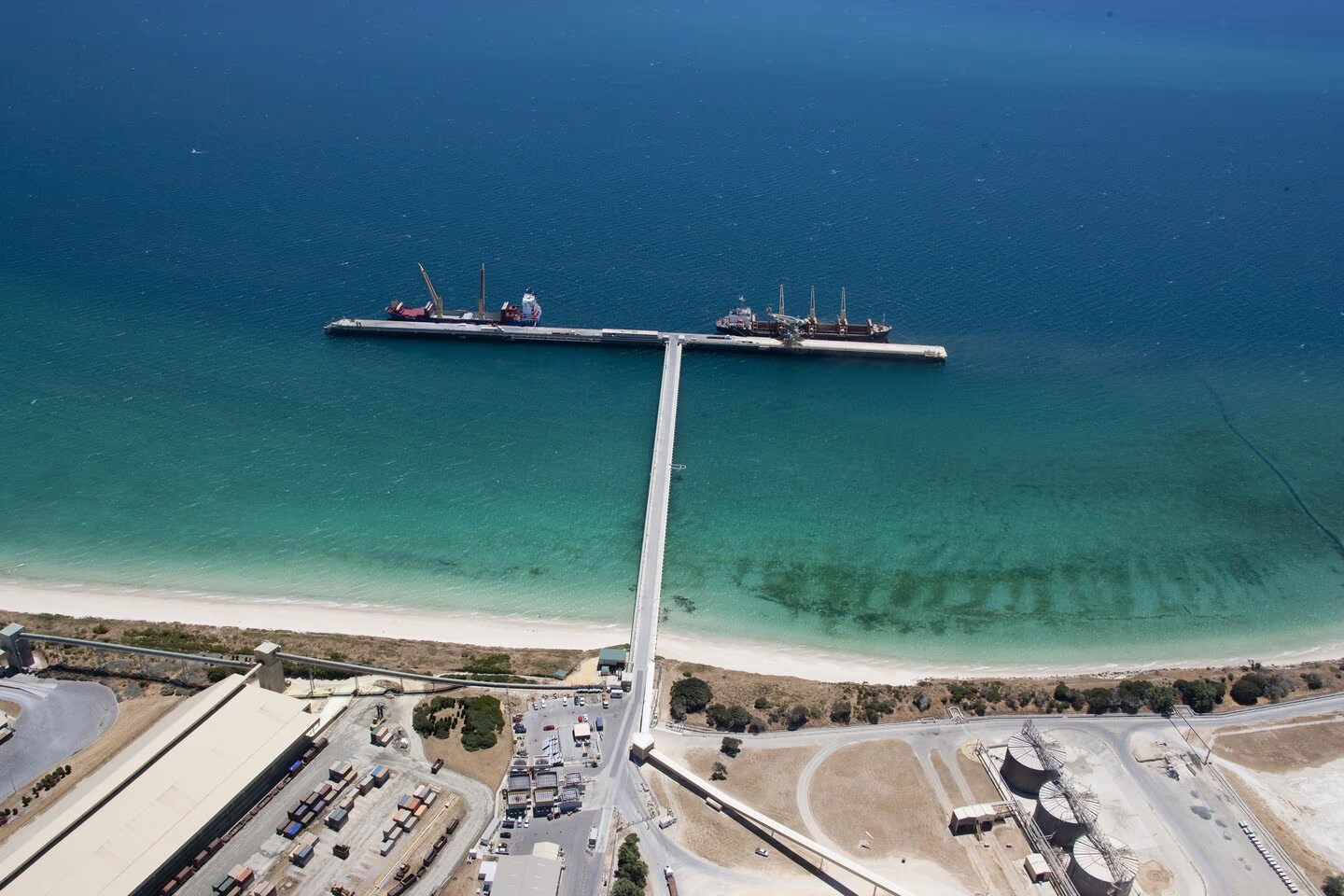
The Western Australian government has agreed to examine industry-led options to de-bottleneck the Kwinana Bulk Jetty, responding to sustained lobbying from local businesses that say the constraint is costly.
Local industry groups have argued for years that the jetty’s limited throughput imposes delays and extra costs, and they estimate the problem costs business roughly $70 million each year.
The government’s decision is to explore proposals rather than commit public funds or a specific project, signalling it will assess the feasibility of solutions driven by the private sector.
Industry-led de-bottlenecking typically means companies or consortia bring forward proposals to increase capacity or efficiency, with government considering regulatory or facilitation roles; the state’s statement framed the approach as a response to sustained industry concerns.
The Kwinana Bulk Jetty serves industrial operators and exporters based in the Kwinana precinct, and the bottleneck has been a recurring subject of complaints by companies dependent on steady port access and predictable shipping schedules.
Improving the jetty’s performance is likely to affect logistics providers, downstream processors and firms that export or import bulk products via the facility, although details of which operators might lead any project have not been released.
The state has not published a timetable, cost estimate or scope for the review, and it has not confirmed whether any subsequent works would be wholly industry-funded, jointly financed, or supported through regulatory changes.
Business groups and port users will be watching for the government’s invitation process and the criteria it sets for industry proposals, including technical capability, likely benefits and how costs and gains would be shared.
A decision to pursue an industry-led model would mirror other infrastructure approaches where private-sector participants propose targeted upgrades rather than relying on large, centralized public spending.
For now, the government’s exploration marks the first formal acknowledgement of the problem at the state level after years of complaints from businesses in the area.
There is no public detail yet on which stakeholders will be consulted, or when the state expects to report back on the viability of industry-led fixes. The claim about annual industry costs remains the principal figure guiding the issue.
Category: Business