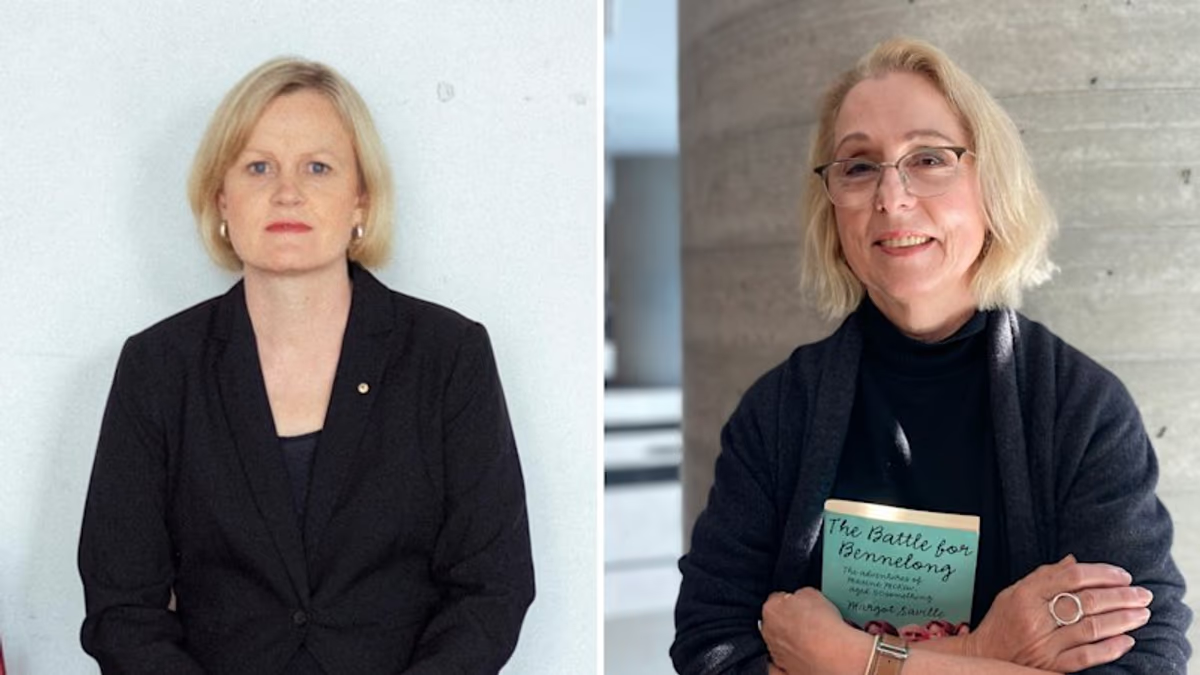
Margot Saville says she received an email a few months ago that appeared to come from the ABC, asking if presenter Sally Sara would like to interview her for an oral history project about her first book, The Battle for Bennelong.
Saville, who listens to Radio National Breakfast most mornings and describes herself as a long‑time fan, replied enthusiastically. She told the paper she felt a personal connection to the presenter, and that excitement shaped her response.
An assistant purportedly working for the ABC then asked for more information. Saville says she sat down and wrote a long reply, outlining her inspiration, research methods and what she described as her “oeuvre”.
She has published four books, Saville notes, two under her own name and two as a ghostwriter. Her most recent book is The Teal Revolution, which she wrote over winter while wearing an old Uniqlo fleece and tracksuit pants, she recalled, adding a wry detail that local church ladies once mistook her for someone in need and offered free bread.
Soon after sending material to the email address, Saville noticed the messages contained large sections of text generated by artificial intelligence, and she wondered whether the ABC was using automated copy. That unease grew when she read a news report warning that scammers were using AI to pose as agents, publishers and marketers to contact authors.
Ian Gardiner, 76, who has received similar approaches, told reporters an inflating message of praise can catch authors off guard. “You’ve got to be pretty hard‑skinned not to think, ‘Oh that’s a nice idea’,” Gardiner said.
After reading the report, Saville realised she had not been communicating with the ABC at all but with a fraudster. She said the discovery left her with sleepless nights and an uncomfortable sense of vulnerability, calling herself, in her piece, a “victim‑in‑waiting”.
“It’s the same dream that the scammers are exploiting. It plays on and manipulates the emotions, which of course is how scammers always get victims.”
Victoria Strauss made that comment in connection with a wave of scams aimed at writers, warning that flattering, well‑researched approaches are designed to trigger an emotional response and reduce scepticism.
Saville’s experience is part of a broader warning to authors and other cultural professionals: convincing impersonations and the use of AI to draft messages make verification harder and mean that flattering, personalised approaches deserve particular caution. Saville ended her account with a self‑deprecating note that she’d be willing to bring copies of her book and even transfer money to anyone genuinely interested, a reminder of how flattering contact can override ordinary caution.
Authorities and industry bodies have been urging creative professionals to verify contacts and remain suspicious of unsolicited offers that ask for personal information or send urgent requests, as scammers increasingly target trusted cultural channels.