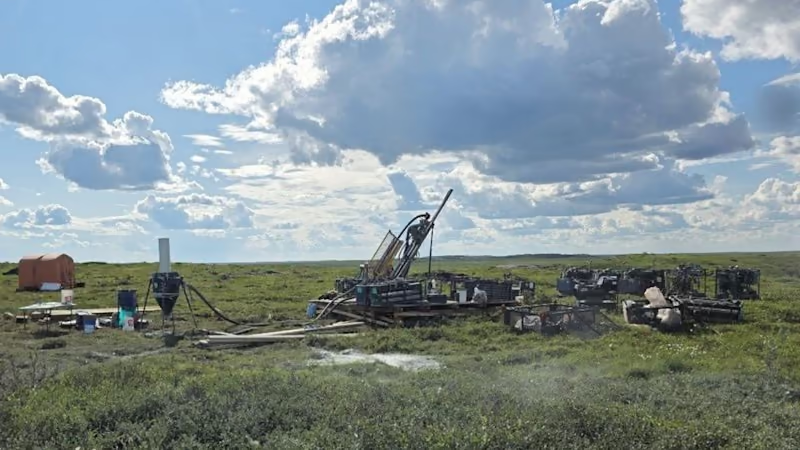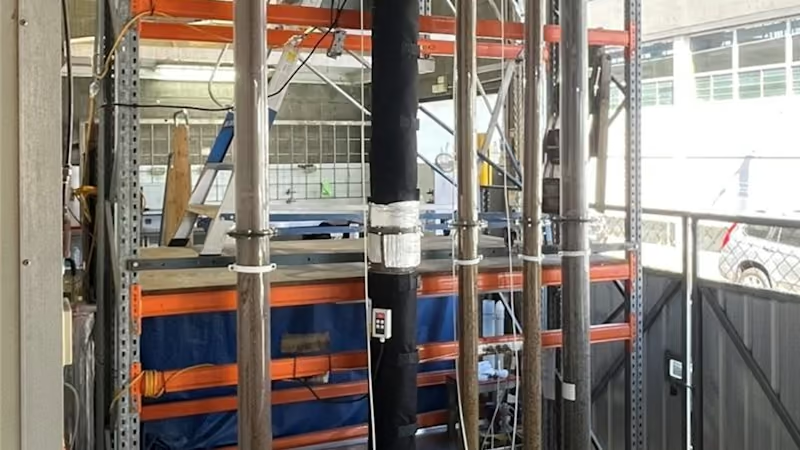
Red Metal has begun a major metallurgical campaign at its Sybella rare‑earths project in Queensland, installing six‑metre‑tall column leach tests designed to mimic a full‑scale heap‑leach operation for the company’s vast deposit.
The programme will load -20mm crushed ore into 150mm‑diameter columns that stand six metres high, using slightly weathered rock and transitional ore from Sybella’s Kary Zone, located about 20km south of Mount Isa.
Heap leaching involves percolating an acidic solution through crushed rock to dissolve target metals, which are then recovered from the leachate. For a bulk, near‑surface deposit such as Sybella, the method could offer a comparatively low‑cost processing route if recovery rates and reagent consumption are favourable.
The six‑metre program builds on earlier two‑metre column tests that delivered neodymium recoveries of up to 76% and praseodymium recoveries of up to 78% from transitional ore. The taller columns aim to better replicate compaction, percolation and acid distribution that would occur on a commercial heap pad.
“This important next step far more closely replicates the compaction, percolation and acid distribution behaviour we expect inside a full‑scale commercial heap leach,” said Red Metal managing director Rob Rutherford.
Alongside the six‑metre trials, Red Metal has started a separate series of two‑metre columns testing a coarser -30mm crush size. Demonstrating acceptable recoveries with a coarser grind could materially reduce crushing costs and possibly allow higher stacking heights on pads, both of which would improve project economics.
Sybella already hosts a headline 4.795‑billion‑tonne inferred resource, and the company has emphasised the potential for near‑surface, bulk‑tonnage mining that could be compatible with heap‑leach processing.
The current work is feeding into an ongoing prefeasibility study (PFS) that Red Metal is targeting to complete early next year, and is intended to provide the most realistic data yet ahead of a planned definitive feasibility study (DFS).
Separately, Red Metal has expanded a “Big Copper” exploration push in Queensland’s north‑west minerals province, lodging 17 new tenement applications around its Gulf and Three Ways projects. The company is planning two fully funded drill holes to test targets at those projects, with the Gulf hole partly supported by a $200,000 Queensland Government grant.
If the larger column tests confirm strong recoveries with reasonable acid consumption, the results could materially change the project’s cost profile and attractiveness to investors, given the scale of the resource. Red Metal says it will release results from both the six‑metre and coarser‑crush programs as they become available.
For now, the company’s focus is on converting laboratory success into realistic, scalable process data that will underpin the next stages of economic studies. The industry will be watching closely: a successful heap‑leach route at Sybella would be a notable development for large‑scale rare‑earths processing in Australia.